Mizuki Shigeru Road: Japan's Most Haunted Street (In the Best Way Possible)
Published: April 7, 2026
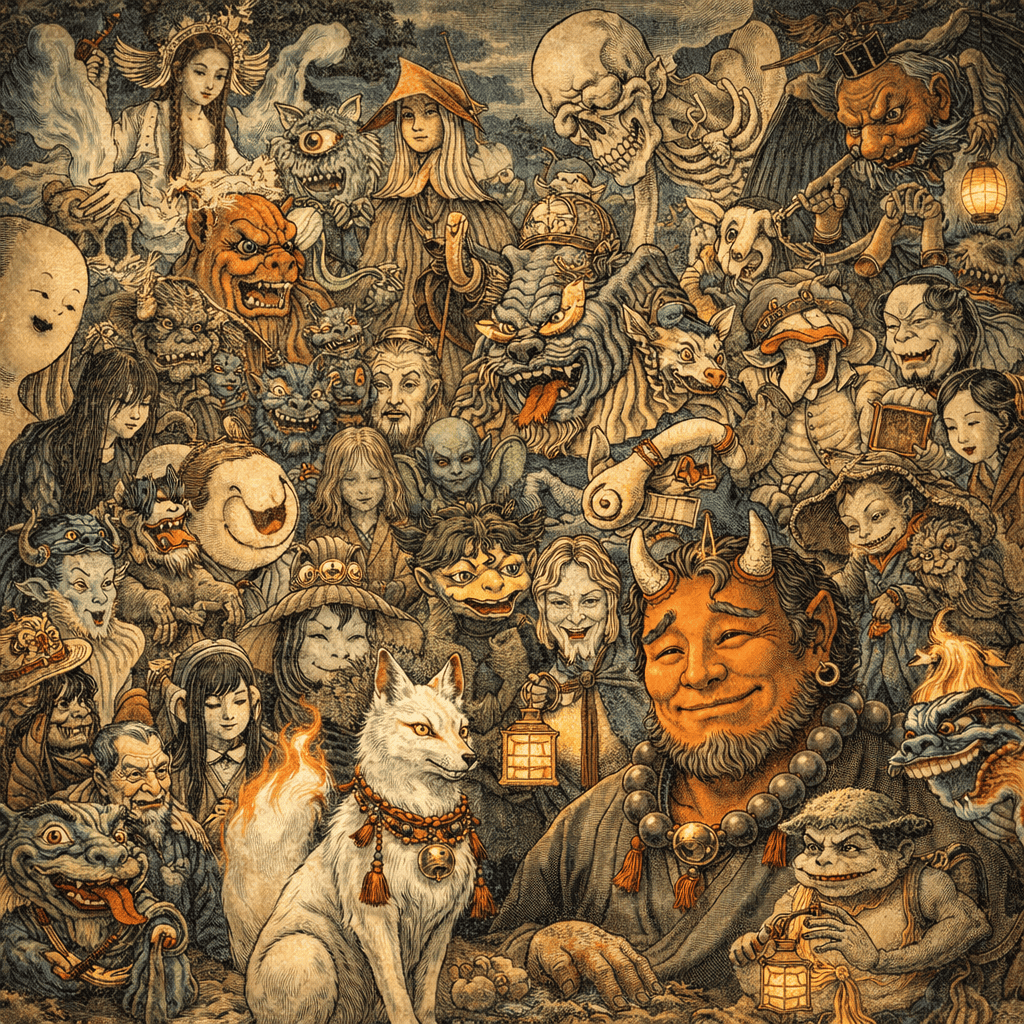
There is a street in Japan where yokai outnumber the living. In the small port city of Sakaiminato, Tottori Prefecture, an 800-meter road stretches from the train station to a memorial museum, and along every meter of it, bronze figures of supernatural beings stare back at you from the sidewalk. There are 178 of them. River demons crouch beside drainage grates. Shape-shifting cloth spirits drape themselves over railings. One-eyed monks peer up from beside benches where tourists sit eating crab ice cream. This is Mizuki Shigeru Road, and by sheer density of supernatural inhabitants per square meter, it may be the most haunted place in all of Japan. The difference is that here, the haunting is deliberate, celebratory, and completely open for business twenty-four hours a day.
The road is named after Mizuki Shigeru, the manga artist who dedicated his life to bringing Japan's yokai traditions into the modern imagination. What he created was not merely a comic strip but a bridge between centuries of folk belief and a contemporary audience that was rapidly forgetting its own supernatural heritage. The street that bears his name is the physical embodiment of that mission: a place where ancient folklore walks alongside the living, where the invisible world has been made visible in bronze, and where the boundary between the mundane and the supernatural dissolves with every step. It is a pilgrimage site for folklore enthusiasts, a tourist attraction for families, and a monument to the idea that Japan's most powerful cultural inheritance is not its technology or its architecture but its monsters.
Who Was Mizuki Shigeru?
Mizuki Shigeru was born Mura Shigeru on March 8, 1922, in the city of Sakaiminato, Tottori Prefecture, on the coast of the Sea of Japan. From his earliest childhood, he was immersed in the folklore of the region. A woman named Nonnoba, an elderly neighbor who served as something between a babysitter and a spiritual guide, filled his young mind with stories of yokai, the supernatural beings that populated every shadow, river, and mountain path in traditional Japanese belief. These stories were not entertainment to Nonnoba. They were fact. The yokai were real, she told the boy, and they were everywhere, and if you paid attention, you could feel their presence in the creaking of old houses and the shifting of evening shadows. That conviction never left Mizuki. It became the foundation of his life's work.
The Second World War interrupted everything. Mizuki was conscripted into the Imperial Japanese Army and sent to Rabaul on the island of New Britain in Papua New Guinea, one of the most brutal theaters of the Pacific War. The conditions were catastrophic. Malaria, starvation, and relentless Allied bombing killed the vast majority of his unit. Mizuki himself was caught in an explosion that destroyed his left arm. He nearly died of malaria in a field hospital. Through the entire ordeal, the young soldier found solace in drawing and in his memories of Nonnoba's yokai stories. The experience of surviving a war that killed almost everyone around him gave Mizuki an intimacy with death that would permanently shape his art. His yokai were never merely whimsical. They carried the weight of a man who had seen the boundary between the living and the dead become horrifyingly thin.
After the war, Mizuki struggled for years as a manga artist, living in poverty while developing the work that would eventually make him famous. His breakthrough came with GeGeGe no Kitaro, a manga series about a boy born in a graveyard who serves as a mediator between the human world and the yokai world. Kitaro, a one-eyed boy whose dead father exists as a sentient eyeball that rides on his head, became one of the most iconic characters in Japanese popular culture. The series, which began serialization in 1960 and spawned multiple anime adaptations, films, and merchandise across six decades, introduced an entire generation to the yokai that Mizuki had learned about from Nonnoba as a child. Through Kitaro, creatures like the Nurikabe, Ittan-momen, and Konaki-jiji became household names in Japan, rescuing them from the obscurity of dusty folklore collections and placing them firmly in the national consciousness.
Mizuki was not only a storyteller. He was a researcher, a cataloguer, and an evangelist for yokai culture. He produced encyclopedic works documenting hundreds of yokai from every region of Japan, traveled the world studying supernatural traditions in other cultures, and advocated tirelessly for the preservation of folk belief as a vital part of Japanese identity. He received the Medal with Purple Ribbon in 2003 and the Order of the Rising Sun in 2010. Sakaiminato named him an honorary citizen. When he died on November 30, 2015, at the age of 93, Japan lost its greatest champion of the invisible world. But the road that bears his name ensures that his mission continues, one bronze yokai at a time. To explore the full catalog of yokai in Japanese folklore, many of which Mizuki helped popularize, is to walk the path he spent a lifetime illuminating.
The Road: Everything You Need to Know
Quick Facts
- Location: Sakaiminato, Tottori Prefecture (JR Sakaiminato Station to Mizuki Shigeru Memorial Museum)
- Length: Approximately 800 meters
- Bronze Statues: 178
- Admission: Free (road and statues)
- Hours: 24 hours (night illumination: sunset to approx. 22:00)
- Access: Directly outside JR Sakaiminato Station
Mizuki Shigeru Road runs from JR Sakaiminato Station to the Mizuki Shigeru Memorial Museum, cutting through the heart of a small fishing city that has transformed itself into the yokai capital of Japan. The road was first established in 1993, when a modest collection of 23 bronze yokai statues were installed along the route. The project was the brainchild of local civic leaders who recognized that Sakaiminato's most famous son had given the city something no economic development plan could manufacture: a mythology. Over the following decades, the collection grew steadily, with new statues added in waves as the road's popularity increased. By 2018, a major renovation expanded the total to 178 statues and reorganized the entire road into five distinct yokai zones, each with its own thematic character.
The economic impact has been extraordinary. Sakaiminato, a city of roughly 33,000 people on the remote coast of the San'in region, now attracts over two million visitors annually, the vast majority of whom come specifically for the yokai road. The surrounding commercial district has embraced the supernatural theme with an enthusiasm that borders on the obsessive. Shops sell yokai-shaped bread, yokai coffee, yokai sake, and yokai souvenirs of every conceivable variety. Banks have installed yokai ATMs. Even the manhole covers feature yokai designs. The transformation of Sakaiminato from a declining fishing town into a thriving supernatural tourism destination is one of the most successful cases of cultural placemaking in modern Japan.
The road itself is pedestrian-friendly, flat, and accessible, running through a traditional shopping street (shotengai) lined with small shops, restaurants, and galleries. Walking the full 800 meters at a leisurely pace, stopping to examine each statue and read the accompanying plaques, takes approximately one to two hours. Most visitors spend between three and five hours in the area when including the memorial museum, shopping, and dining.
The Five Zones of Yokai
The 2018 renovation transformed Mizuki Shigeru Road from a single continuous stretch of yokai statues into a carefully curated journey through five distinct thematic zones. Each zone represents a different aspect of the yokai world as Mizuki Shigeru understood it, moving from the fictional universe of his manga to the deepest roots of Japanese folk belief. The zones are not physically separated by walls or gates but are distinguished by changes in statue themes, signage, and atmospheric design, creating a narrative arc that visitors follow as they walk from the station toward the museum.
Zone 1: The World of Mizuki Manga
The journey begins at JR Sakaiminato Station with the characters that made Mizuki famous. This zone features bronze statues of Kitaro, Medama-Oyaji (the eyeball father), Neko-Musume (the cat girl), and the other principal characters of GeGeGe no Kitaro. For visitors familiar with the anime and manga, this zone functions as a reunion with beloved characters. For newcomers, it serves as an introduction to Mizuki's creative universe, the lens through which he interpreted and transmitted centuries of yokai folklore to modern audiences. The statues here tend to be the most photographed on the entire road, and during peak tourist seasons, queues form to take pictures with the Kitaro statue near the station entrance.
Zone 2: Yokai of the Forest
Moving deeper into the road, the second zone shifts focus from fictional characters to the yokai of Japan's forests and mountains. These are the creatures that inhabit the wild spaces beyond human civilization, the deep woods where even experienced hunters feared to venture after dark. Statues in this zone represent beings from the mountain and forest traditions of Japanese folklore, including tree spirits, animal yokai, and the terrifying entities that were said to ambush travelers on isolated mountain paths. The atmospheric design of this zone incorporates more greenery and natural motifs, subtly shifting the visitor's experience from an urban shopping street to something that evokes the wild spaces where these beings were believed to dwell.
Zone 3: Divine and Ominous Yokai
The third zone occupies the philosophical heart of the road. Here, the statues represent yokai that blur the line between monster and deity, the powerful supernatural beings that were feared and worshipped in equal measure. In Japanese folk religion, the boundary between a god (kami) and a demon (oni) has always been porous. A deity neglected or angered could become a vengeful spirit. A monster appeased and honored could become a protective god. The statues in this zone embody that ambiguity, representing beings whose nature depends entirely on how humans relate to them. This is the zone that best captures the essence of Japanese supernatural thought: the understanding that the sacred and the terrifying are not opposites but aspects of the same fundamental reality.
Zone 4: Yokai of Everyday Life
The fourth zone brings the supernatural into the domestic sphere. These are the yokai that inhabit the spaces where ordinary people live and work: the kitchen, the bathroom, the shop, the road between home and market. Japanese folklore is distinctive in its insistence that the supernatural is not confined to remote mountains or ancient temples but permeates the most mundane aspects of daily life. The yokai in this zone are the creatures that explain why tools go missing, why dishes break without being dropped, why certain rooms in certain houses always feel uncomfortable. They are the supernatural infrastructure of everyday existence, the invisible agents behind the small mysteries that accumulate in the course of ordinary living.
Zone 5: Yokai of the Home
The final zone, approaching the Mizuki Shigeru Memorial Museum, focuses on the yokai most intimately connected to the domestic space. These are the spirits of the household, the beings that share our homes whether we know it or not. Some are benevolent, like the Zashiki-warashi, the child spirit whose presence brings prosperity to a household. Others are mischievous or dangerous, like the Akaname, the filth-licking demon that appears in neglected bathrooms. Together, they represent the Japanese folk understanding that a house is never merely a building. It is a shared space between the human and the supernatural, and the well-being of the household depends on maintaining a harmonious relationship with its invisible residents.
Meet the Yokai: Creatures from Japanese Folklore
A Note on Images
The bronze statues of Mizuki Shigeru Road include many characters from GeGeGe no Kitaro and other works, which are protected by copyright (© Mizuki Productions). We are unable to reproduce images of these characters here.
To see the full list and official map of all 178 bronze statues, please visit the official Sakaiminato Tourism Guide:
Official Mizuki Shigeru Road Guide Map →
Below, we introduce the yokai from traditional Japanese folklore that also appear on the road — paired with our own original artwork.
Kappa
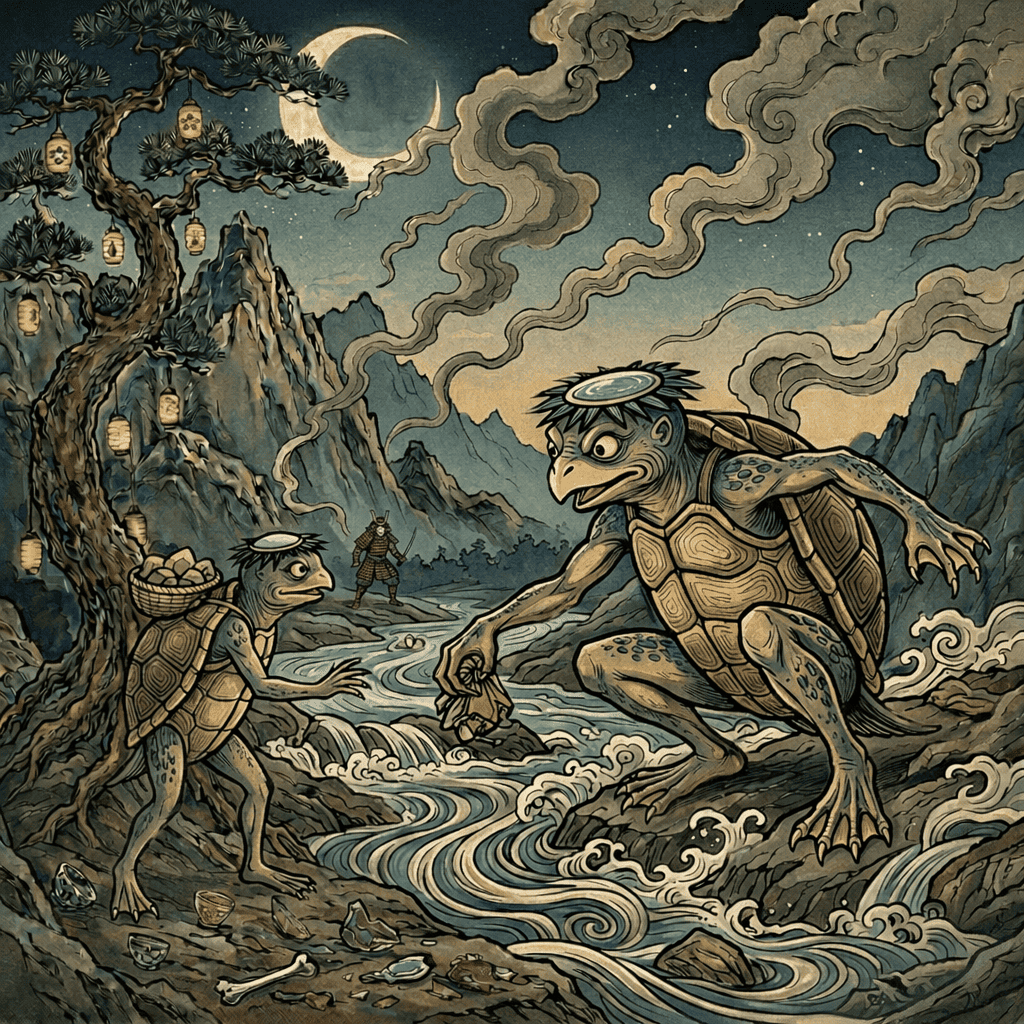
The Kappa is one of the most recognized yokai in all of Japanese folklore, and its bronze statue on Mizuki Shigeru Road is among the most popular photo spots. A water-dwelling creature roughly the size of a child, the Kappa is typically described as having green, scaly skin, a turtle-like shell on its back, webbed hands and feet, and a distinctive dish-shaped depression on top of its head called a sara. This dish must remain filled with water at all times. If the water spills, the Kappa loses its supernatural strength and becomes helpless, a vulnerability that humans have exploited in countless folk tales by tricking the compulsively polite creature into bowing and emptying its dish.
Despite its comical appearance, the Kappa of genuine folklore is a genuinely dangerous creature. It was blamed for drowning children, pulling horses into rivers, and extracting a mythical organ called the shirikodama from the anuses of its victims. Warnings about Kappa were posted near dangerous rivers throughout Japan for centuries, serving as practical safety messages wrapped in supernatural narrative. Yet the Kappa was also capable of great loyalty and generosity. Stories abound of Kappa who, once befriended or bested, taught humans the secrets of bone-setting medicine, helped with irrigation, or provided fish to poor families. This duality, murderous predator and potential benefactor, makes the Kappa one of the most complex and enduring figures in the yokai tradition. To read the complete folklore history, see our full article on the Kappa.
Nurikabe
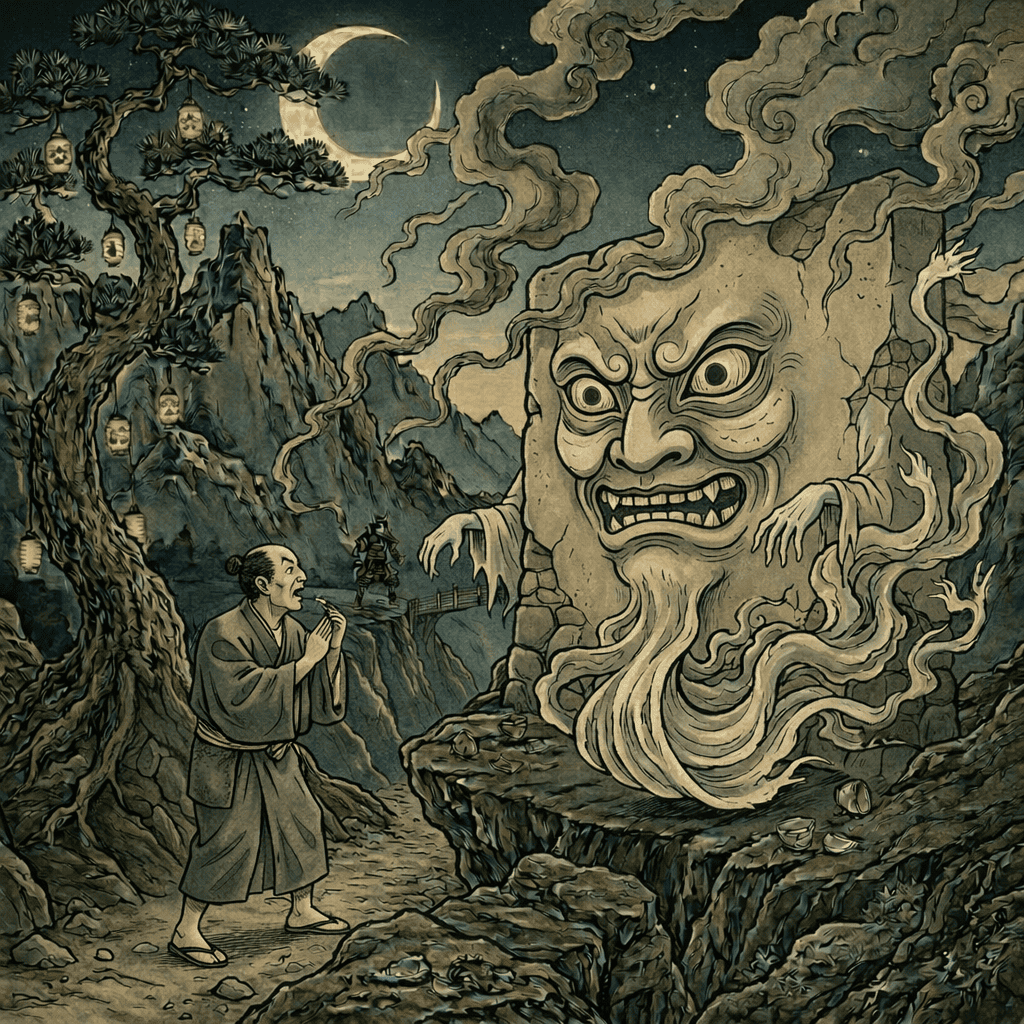
Nurikabe is one of Kitaro's most beloved companions in GeGeGe no Kitaro, but the folklore behind this yokai is far older and stranger than Mizuki's friendly interpretation suggests. In traditional Japanese belief, the Nurikabe is an invisible wall that appears without warning on roads at night, blocking travelers from proceeding. You cannot see it. You cannot climb over it. You cannot go around it. The wall extends infinitely in all directions, or so it seems to the disoriented traveler stumbling in the darkness. The only traditional countermeasure is to tap the ground near the base of the wall with a stick, which is said to cause the Nurikabe to vanish.
The Nurikabe legend likely originated in Fukuoka Prefecture on the island of Kyushu and may reflect the genuine disorientation that travelers experienced on unfamiliar roads in an era before streetlights or reliable maps. Mizuki Shigeru transformed this shapeless terror into a lovable, hulking creature with tiny eyes and stubby limbs, a character so endearing that it became one of the most popular supporting characters in the Kitaro franchise. The bronze statue on Mizuki Shigeru Road depicts Mizuki's version: a massive, friendly-looking wall creature that children love to pose beside. Read our complete Nurikabe article for the full folklore history.
Ittan-momen
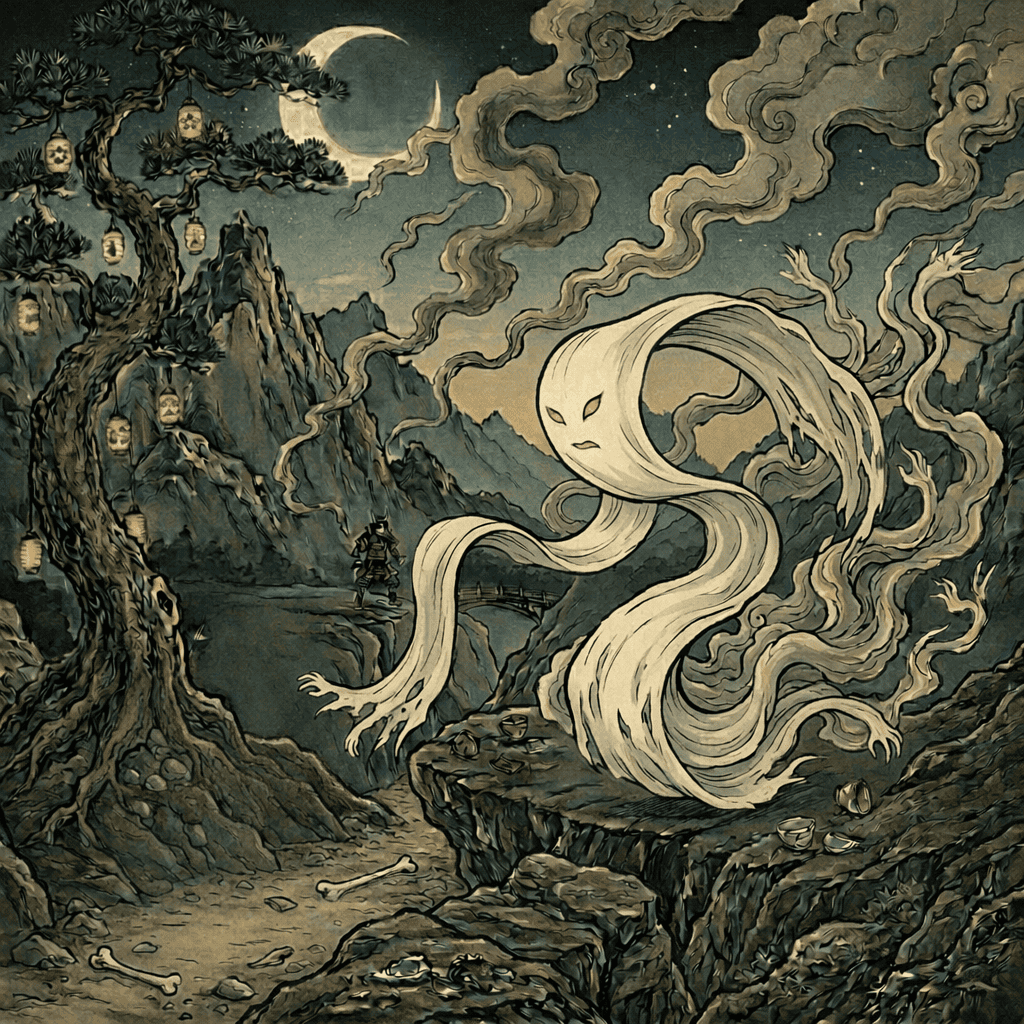
Ittan-momen, literally "one bolt of cotton," is a yokai that takes the form of a long strip of white cloth that flies through the night sky. In Mizuki's manga, Ittan-momen serves as a flying mount for Kitaro and his companions, a friendly aerial taxi that whisks the characters to wherever they need to go. The bronze statue on the road captures this cheerful interpretation, depicting the cloth spirit with a smiling face and outstretched wings.
The original folklore is considerably less charming. In the traditions of Kagoshima Prefecture in southern Kyushu, Ittan-momen is a murderous spirit that attacks travelers at night, wrapping itself around their faces to suffocate them or coiling around their necks to strangle them. It strikes without warning and without apparent motive, a random and lethal hazard of nighttime travel. The transformation from airborne killer to friendly flying carpet is one of the most dramatic examples of Mizuki's ability to rehabilitate terrifying yokai for modern audiences while preserving their essential supernatural nature. For the complete story, see our Ittan-momen article.
Konaki-jiji
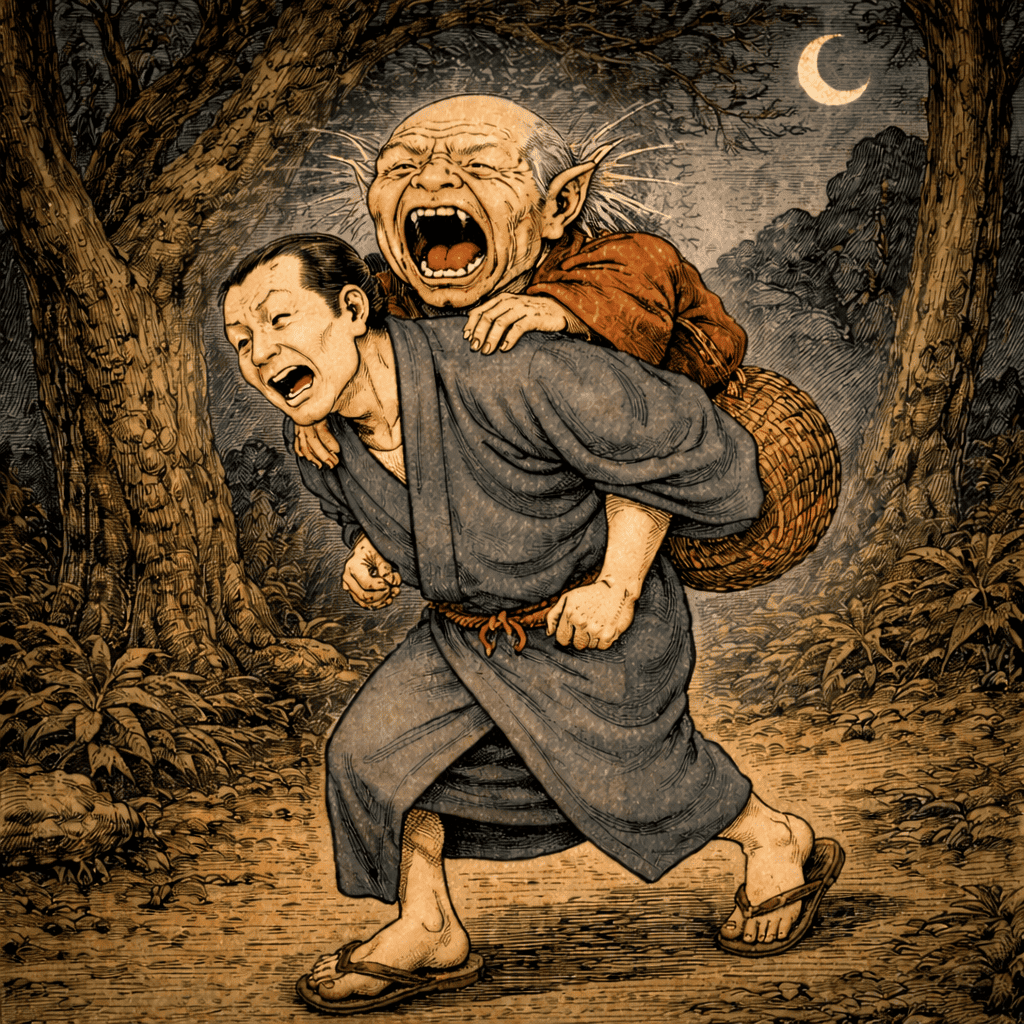
Konaki-jiji, the "old man who cries like a baby," is one of the most unsettling yokai in the Japanese folk tradition and another of Kitaro's regular allies in Mizuki's manga. The creature appears as an abandoned infant on a mountain road, crying pitifully to attract the sympathy of passing travelers. When a kindhearted person picks up the apparent baby, the Konaki-jiji reveals its true nature: it grows rapidly heavier, its face transforms into that of an elderly man, and it clings to its victim with supernatural strength, eventually crushing them to death under its impossible weight.
The legend originates from the mountainous regions of Tokushima Prefecture on the island of Shikoku, where isolated forest roads and the sounds of wildlife at night created an atmosphere ripe for supernatural explanation. The cry of a baby in a place where no baby should be was a genuine source of terror for travelers, and the Konaki-jiji legend served as a warning against the dangers of trusting appearances in the wilderness. Mizuki softened the character into a gruff but loyal companion for Kitaro, an old man in a baby's body who uses his crushing weight as a weapon against evil yokai rather than against innocent travelers. Explore the full folklore in our Konaki-jiji article.
Sunakake-baba
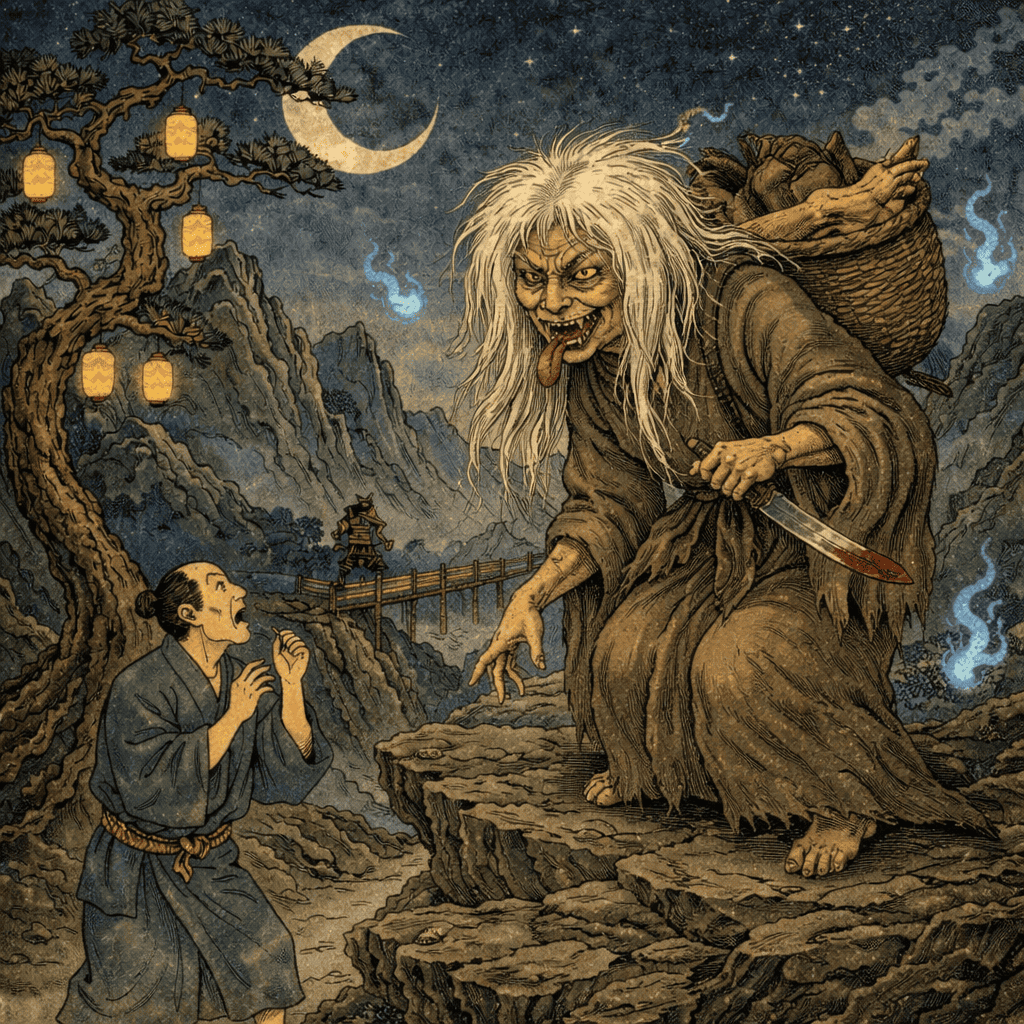
Sunakake-baba, the "sand-throwing hag," is a yokai from the folklore of Nara Prefecture who lurks in forests and bamboo groves, throwing sand at passersby. The original folklore describes an invisible presence that suddenly showers sand or fine gravel on travelers walking through wooded areas, causing disorientation and fear. No one sees the attacker. The sand simply falls from nowhere, and the traveler, unable to identify the source, flees in panic. Some regional versions describe the creature as an elderly woman spirit, while others leave the nature of the being entirely ambiguous.
Mizuki Shigeru gave the Sunakake-baba a distinctive visual identity as a diminutive old woman with wild hair and a mischievous expression, and incorporated her into the Kitaro cast as a wise and formidable ally. On Mizuki Shigeru Road, her bronze statue stands as one of the recognizable supporting characters. The Sunakake-baba belongs to a broader tradition of elderly female yokai in Japanese folklore, a category that includes the fearsome Yamamba, the mountain crone who devours travelers and raises heroes. These crone figures embody the Japanese folk understanding that old women possess spiritual power that younger people lack, a power that can manifest as either deadly menace or protective wisdom depending on how they are approached.
Rokurokubi
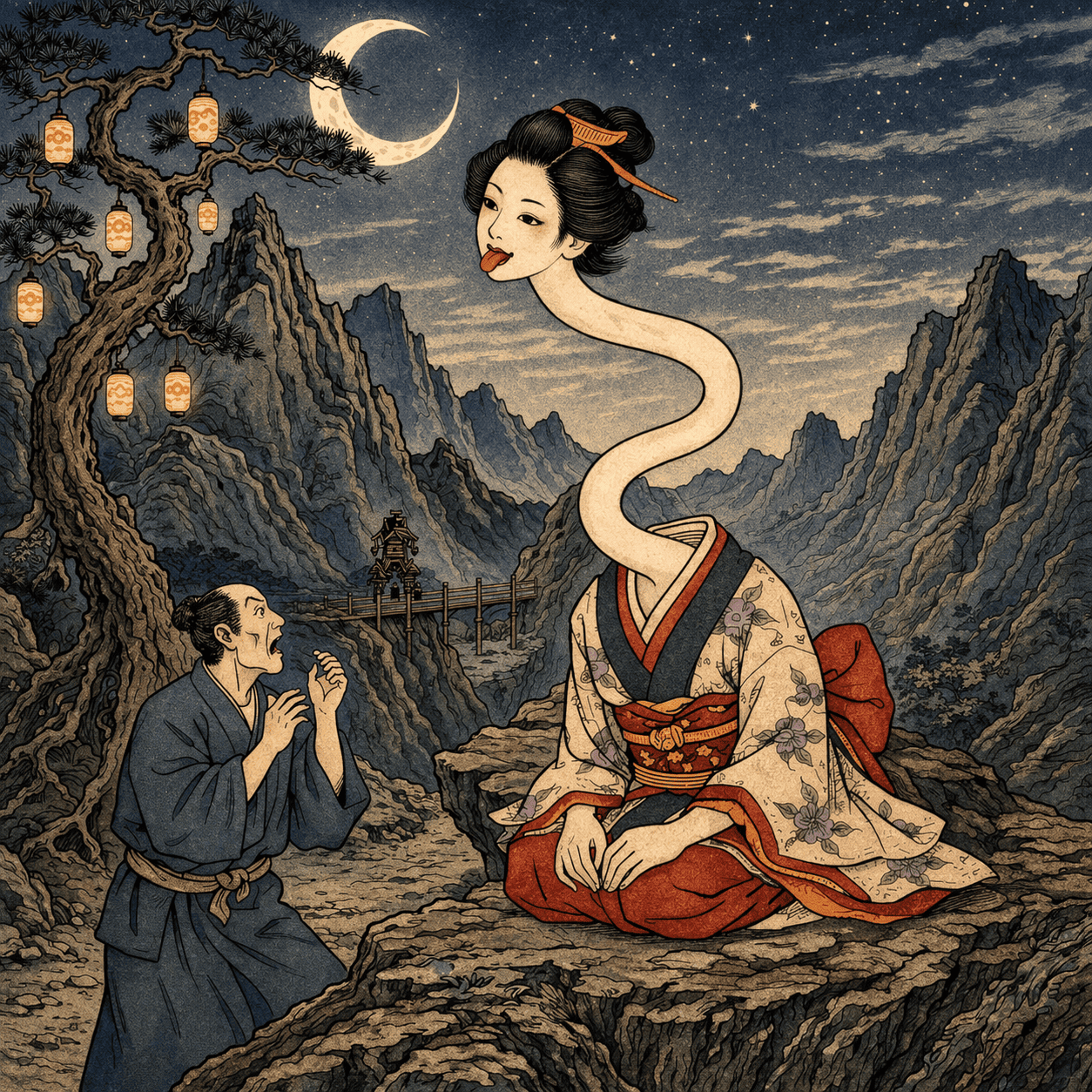
The Rokurokubi is one of the most visually striking yokai in the entire Japanese supernatural tradition, and its bronze statue on Mizuki Shigeru Road never fails to draw attention. By day, the Rokurokubi appears as an ordinary woman, indistinguishable from any other person. But at night, while she sleeps, her neck stretches to an extraordinary length, allowing her head to roam freely around the house, through windows, over rooftops, and into neighboring buildings. In some versions of the folklore, the woman is unaware of her condition and wakes each morning with no memory of her nocturnal wanderings.
The Rokurokubi legend taps into a deep vein of anxiety in Japanese culture about the unknowability of the people closest to us. The person sleeping beside you might not be what they seem. The neighbor who greets you cheerfully in the morning might be something entirely different after dark. This theme of hidden monstrosity within apparent normalcy runs throughout Japanese yokai folklore, but nowhere is it expressed more vividly than in the Rokurokubi tradition. Mizuki Shigeru, characteristically, found both the horror and the humor in this concept, depicting Rokurokubi in contexts that ranged from genuinely frightening to absurdly comedic. For the complete history and cultural analysis, read our Rokurokubi article.
Must-See Spots Along the Road
Yokai World Council
Near the midpoint of the road stands a circular arrangement of bronze yokai statues arranged as if in a formal meeting. This is the Yokai World Council, a playful installation depicting representatives of various yokai species gathering to discuss matters of supernatural governance. The concept reflects Mizuki's recurring theme that the yokai world has its own social structures, hierarchies, and political dynamics that mirror and parody the human world. The installation is a popular gathering spot for tour groups and provides an excellent opportunity to see multiple yokai species together in a single composition.
Kappa no Izumi (Kappa Fountain)
The Kappa Fountain is one of the most photographed installations on the road, featuring a bronze Kappa crouching beside a small water feature. The running water keeps the Kappa's sara (head dish) perpetually filled, a detail that demonstrates the attention to folkloric accuracy that characterizes the best installations on the road. In traditional belief, a Kappa whose dish is full is at the peak of its power; one whose dish has dried is helpless. The fountain plays on this lore with gentle wit, presenting a Kappa in its element, perpetually hydrated and perpetually powerful.
Yokai Shrine
Roughly halfway along the road, a small shrine dedicated to yokai offers visitors the chance to make offerings and prayers to the supernatural world. Unlike conventional Shinto shrines, which are dedicated to specific kami (gods), the Yokai Shrine embraces the entire spectrum of supernatural beings, from the benevolent to the malevolent. Visitors can purchase yokai-themed ema (votive tablets) and omamori (protective charms) unique to this location. The shrine is a clever synthesis of genuine religious practice and tourist attraction, reflecting the historically fluid boundary between spiritual sincerity and commercial enterprise that has characterized Japanese shrine culture for centuries.
Giant Yokai Mural
A large-scale mural depicting scenes from GeGeGe no Kitaroand traditional yokai encounters covers the side of a building near the museum end of the road. The mural combines Mizuki's distinctive art style with references to classical yokai scroll paintings from the Edo period, creating a visual bridge between the historical and the contemporary that encapsulates the road's entire purpose. During the evening illumination period, the mural is lit with special lighting that brings out details invisible during the day, adding another layer of discovery for visitors who return after dark.
Mizuki Shigeru Memorial Museum
At the far end of the road stands the Mizuki Shigeru Memorial Museum, the culmination of the journey and the single most comprehensive collection of Mizuki's art and artifacts in the world. The museum houses original manuscripts, personal belongings, and recreations of Mizuki's studio, alongside extensive exhibits on the yokai folklore that inspired his work. Interactive displays allow visitors to explore the world of yokai through Mizuki's eyes, and rotating exhibitions ensure that even repeat visitors encounter new material. The museum underwent a major renovation and reopened with expanded galleries, making it an essential complement to the outdoor experience of the road itself.
Night on the Road: When Yokai Come Alive
The daytime experience of Mizuki Shigeru Road is charming, educational, and family-friendly. The nighttime experience is something else entirely. As the sun sets over the Sea of Japan and darkness settles over Sakaiminato, the road undergoes a transformation that would have pleased Mizuki immensely. A network of specialized lighting installations activates, casting the bronze statues in dramatic shadows that emphasize their supernatural nature. Statues that appeared cute and approachable in daylight take on an eerie, otherworldly quality under the directed illumination. Eyes seem to glint. Shadows stretch and distort. The friendly shopping street becomes, for a few hours, something that genuinely evokes the atmosphere of a yokai night parade.
The centerpiece of the nighttime experience is the yokai shadow projection system, which casts the silhouettes of approximately 50 different yokai species onto buildings, sidewalks, and walls along the road. These projections appear to move and interact, creating the illusion that invisible yokai are walking alongside the visitors. The effect is subtle and atmospheric rather than theatrical, designed to evoke the traditional Japanese concept of hyakki yagyou, the "Night Parade of One Hundred Demons," in which all the yokai of a region emerge at once to process through the darkness. The projections change seasonally and are occasionally updated with new designs.
The night illumination runs from sunset to approximately 10:00 PM year-round and is completely free to experience. The difference between the daytime and nighttime atmospheres is so pronounced that many visitors specifically plan their trips to include both, arriving in the late afternoon to walk the road in daylight and then staying through the transition into darkness. Local restaurants and izakaya (Japanese pubs) along the road remain open during the illumination hours, allowing visitors to combine the visual experience with food and drink. The combination of yokai atmosphere, local seafood (Sakaiminato is one of Japan's largest crab ports), and the sound of the sea makes for an evening that is uniquely and memorably Japanese.
Nearby Attractions
Eshima Ohashi Bridge (Betabumi-zaka)
Located just a short drive from Sakaiminato, the Eshima Ohashi Bridge has become an internet sensation due to photographs taken from a specific angle that make the bridge appear impossibly steep, like a roller coaster climbing into the sky. In reality, the bridge has a relatively gentle gradient, but the visual illusion created by telephoto lens compression has turned it into one of the most photographed structures in the San'in region. The bridge connects Sakaiminato to Matsue in neighboring Shimane Prefecture and offers excellent views of Nakaumi lagoon. Many visitors to Mizuki Shigeru Road combine their trip with a drive across the "impossible bridge."
Kitaro Train (JR Sakai Line)
The JR Sakai Line, which connects Yonago to Sakaiminato, operates specially decorated "Kitaro Trains" that feature exterior artwork and interior decorations based on GeGeGe no Kitaro characters. Multiple themed trains run on the line, each featuring different yokai designs, and arriving at Sakaiminato Station aboard one of these trains provides a seamless transition into the yokai world of Mizuki Shigeru Road. Even the station itself is decorated with Kitaro-themed artwork and yokai installations, ensuring that the supernatural experience begins before visitors even set foot on the road. The train announcements are voiced by the anime voice actors for Kitaro and his companions, adding another layer of immersion.
Sakaiminato Fish Market
Sakaiminato is one of Japan's busiest fishing ports, particularly renowned for its crab catches. The Sakaiminato Fish Market and the adjacent direct sales center offer visitors the chance to purchase and eat some of the freshest seafood in western Japan, including the prized matsuba-gani(snow crab) in winter and a variety of fish species year-round. The market opens early in the morning, making it an ideal first stop before the shops on Mizuki Shigeru Road open for the day. The combination of supernatural tourism and outstanding seafood is a significant part of Sakaiminato's appeal as a destination.
Yumeminato Tower
The Yumeminato Tower, a waterfront observation tower located near the port, provides panoramic views of the Sea of Japan, Daisen (the tallest peak in the Chugoku region), and the Shimane Peninsula. On clear days, the view extends across Nakaumi lagoon to the mountains of Shimane Prefecture. The tower includes a small museum focused on Sakaiminato's maritime history and its transformation into a yokai tourism destination. It is an excellent spot for getting a geographical sense of the region before or after walking Mizuki Shigeru Road.
Matsue Castle
Approximately 30 minutes from Sakaiminato by car, Matsue Castle is one of only twelve original castles remaining in Japan, meaning its tower has survived since its original construction in 1611 without being destroyed by fire, war, or earthquake. Designated a National Treasure, the castle offers a fascinating counterpoint to the yokai world of Mizuki Shigeru Road, grounding the supernatural experience in the tangible history of the feudal era. Matsue itself, located on the shores of Lake Shinji, is famous for its connection to Lafcadio Hearn (Koizumi Yakumo), the Irish-Greek writer who became a Japanese citizen and produced some of the most influential English-language accounts of Japanese ghost stories and folklore in the late nineteenth century.
How to Get There
By Train
The most atmospheric way to reach Mizuki Shigeru Road is by train on the JR Sakai Line, which runs from Yonago Station to Sakaiminato Station. The journey takes approximately 45 minutes and offers the chance to ride one of the decorated Kitaro trains. Yonago Station is accessible from major cities via JR limited express trains: approximately 2 hours from Okayama, 3 hours from Osaka (via Okayama), and 2.5 hours from Hiroshima. From Tokyo, the fastest route is to fly to Yonago Kitaro Airport and then take a short bus or taxi to Yonago Station. The Sakai Line departs frequently throughout the day, with the last return trains running in the late evening.
By Air
Yonago Kitaro Airport (officially Miho-Yonago Airport, but renamed with the Kitaro branding in 2010) offers direct flights from Tokyo Haneda, making it the fastest way to reach Sakaiminato from the capital. The airport itself is decorated with yokai artwork and installations, continuing the immersive experience that Tottori Prefecture has built around Mizuki's legacy. From the airport, Sakaiminato is approximately 20 minutes by taxi or bus. The airport also serves as a gateway to the broader San'in region, including Matsue, Izumo, and the Tottori Sand Dunes.
By Car
For visitors traveling by car, Sakaiminato is approximately 30 minutes from the Yonago IC (interchange) on the San'in Expressway. Parking is available at several lots near JR Sakaiminato Station and along the road, though spaces fill quickly during peak tourist seasons and weekend afternoons. Driving allows for easy combination of Mizuki Shigeru Road with nearby attractions such as the Eshima Ohashi Bridge, Matsue Castle, and the Adachi Museum of Art, creating a multi-day itinerary through one of Japan's most culturally rich and least crowded regions.
Tips for Visiting
The Yokai Stamp Rally
One of the most popular activities on Mizuki Shigeru Road is the Yokai Stamp Rally, in which visitors collect stamps from stations positioned along the road. Each stamp features a different yokai design, and collecting a complete set unlocks rewards at participating shops. The stamp rally transforms a simple walk into an interactive scavenger hunt and is particularly popular with families and children. Stamp books can be purchased at shops near the station or at the tourist information center. Completing the full rally requires visiting every section of the road, ensuring that participants see the entire collection of bronze statues.
Visit Both Day and Night
If your schedule allows, plan to walk the road twice: once during the day and once after dark. The daytime experience emphasizes the detail and craftsmanship of the bronze statues, the cheerful atmosphere of the shopping street, and the educational content of the informational plaques. The nighttime experience reveals a completely different character, with dramatic lighting, shadow projections, and an atmosphere that genuinely evokes the feeling of walking through a world where yokai are real and present. The transition from day to night is itself part of the experience, mirroring the Japanese folk belief that sunset is the boundary between the human world and the supernatural world.
Avoiding the Crowds
Mizuki Shigeru Road is busiest during Golden Week (late April to early May), Obon (mid-August), and weekends throughout the summer months. If you prefer a quieter experience, visit on weekdays during spring or autumn, when the weather is pleasant and the crowds are manageable. Early morning visits, before the shops open around 9:30 AM, offer the chance to photograph the statues without crowds. Winter visits provide the most solitude but come with shorter daylight hours and cold temperatures from the Sea of Japan coast winds.
Yokai Gourmet
The shops and restaurants along Mizuki Shigeru Road have embraced the yokai theme with remarkable creativity. Look for Medama-Oyaji (eyeball father) manjuu, a steamed bun with a red bean filling shaped like Kitaro's father; yokai latte art at local coffee shops; Kitaro-themed curry rice; and a variety of yokai-shaped sweets and snacks. Several restaurants serve the local specialty of crab in various preparations, from simple boiled to elaborate multi-course kaiseki meals, and the combination of yokai atmosphere and exceptional seafood is one of the unique pleasures of a Sakaiminato visit. Yokai-themed sake from local breweries also makes an excellent souvenir for adult visitors.
Conclusion
Mizuki Shigeru Road is more than a tourist attraction. It is a physical manifestation of one man's lifelong conviction that the supernatural beings of Japanese folklore deserve to be remembered, respected, and encountered by every generation. Mizuki Shigeru survived a war that should have killed him, lost an arm in a jungle on the other side of the Pacific, and returned home to spend the next seventy years drawing monsters. Not because he thought they were cute, though he often drew them that way. Not because he thought they would sell merchandise, though they did, spectacularly. But because he believed, with the sincerity of the child who listened to Nonnoba's stories in a small house by the sea, that the yokai are real, that they are part of the fabric of Japanese identity, and that forgetting them would mean losing something essential about what it means to live in a world that is far stranger and more populated than our eyes alone can perceive.
The 178 bronze figures that line this 800-meter road are not decorations. They are monuments to a tradition that stretches back centuries, a tradition of seeing the invisible, naming the unnamed, and finding meaning in the mysterious. Every Kappa crouching by its fountain, every Nurikabe standing placidly on a sidewalk, every Rokurokubi stretching its impossible neck toward the sky is an invitation to look at the world differently. To visit Mizuki Shigeru Road is to accept that invitation, to walk through a landscape where the boundary between the real and the imagined, the natural and the supernatural, the living and the dead has been deliberately and lovingly erased.
If you go, go in the evening. Walk slowly. Read the plaques. Listen to the sound of your footsteps on the old shopping street. And when the shadows lengthen and the lights come on and the yokai projections begin to move along the walls, remember that you are not looking at a show. You are looking at the world the way Mizuki Shigeru always saw it: full of invisible beings, ancient and present, waiting to be noticed by anyone willing to pay attention.
This is The Yokai Files.
Support The Yokai Files
Enjoyed this deep dive into Japanese folklore?
The Yokai Files is reader-supported. Your support helps us research deeper, write more, and keep the darkness alive.