Yurei: Japan's Vengeful Ghosts That Refuse to Rest Until Justice is Done
Published: March 28, 2026
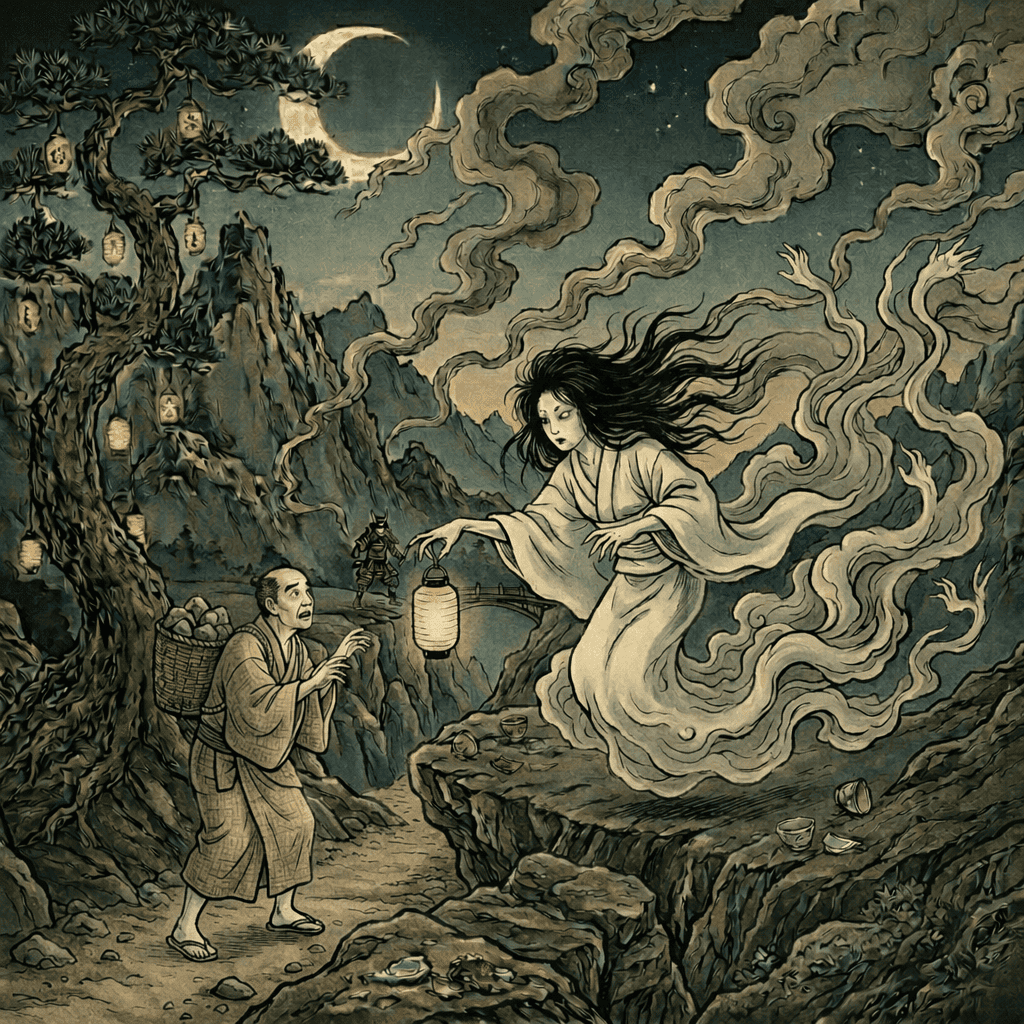
She died badly. Everyone close to her failed her — the husband who abandoned her, the lover who betrayed her, the society that gave her no recourse. Her death was unjust, her suffering real, and the feelings that consumed her in her final moments — jealousy, rage, grief, the burning desire for things to have been different — did not dissipate when her body stopped breathing. They intensified. They crystallized into something that exists outside of time, driven by a single unwavering purpose: to find the source of her suffering and make it understand, in the most direct possible terms, what it did.
Yurei are Japan's ghosts, and they are unlike the ghosts of almost any other tradition. They do not rattle chains. They do not simply haunt locations. They haunt people — specific people, specific situations, specific unresolved injustices — with a focused, patient intensity that makes them among the most psychologically terrifying supernatural beings in world folklore. A yurei does not just want to frighten you. It wants you to understand exactly why it is there, exactly what was done, and exactly how that knowledge will follow you until your own death.
What is Yurei?
The word yurei is composed of two characters: "yu" (faint, dim, hidden) and "rei" (soul, spirit). A yurei is specifically the spirit of a person who has died in a state of powerful emotional disturbance — typically grief, jealousy, rage, or the urgent need for a wrong to be righted — that prevents their soul from making the normal transition to the afterlife. In Japanese religious understanding, death is supposed to be followed by proper funeral rites, mourning, and a gradual transition of the spirit from the living world to the realm of the dead. When this process is interrupted — by violent or unjust death, by suicide, by the inability to let go of powerful earthly attachments — the spirit becomes a yurei.
Japanese ghost lore distinguishes between several types of yurei based on their emotional state and motivation. Onryo are the most feared — vengeful spirits driven by jealousy or rage, capable of physical harm and death. Funayurei are the ghosts of those who drowned, who seek to drag the living down to join them. Goryou are the elevated form of powerful vengeful spirits, capable of causing widespread natural disasters — the most famous historical example being the spirit of the politically destroyed Prince Sawara, whose goryou was believed responsible for epidemics and deaths in the early Heian court. Zashiki-warashi represents a benevolent extreme of the spectrum. But the archetypal yurei — the one that haunts Japanese horror from Edo Period kabuki to modern film — is the onryo: the woman in white, with long black hair falling over her face, moving toward you with a terrifying, inhuman patience.
The gendering of the yurei tradition is significant and deliberate. The overwhelming majority of famous yurei in Japanese lore are women — women who were wronged by men, by social structures, by circumstances that gave them no other recourse than death and the supernatural power that comes after it. This is not incidental. The onryo tradition reflects and encodes a specific social reality: that the women with the least power in life become, in death, the most powerful beings in the supernatural world. The yurei is in part a fantasy of reversal, a vision of what justice might look like when all earthly options have been exhausted.
What Does Yurei Look Like?
The visual iconography of the yurei is one of the most recognizable in world supernatural art. The standard depiction was largely established during the Edo Period through kabuki theater and woodblock print art, and has remained extraordinarily consistent across centuries and media. The yurei wears a white funeral kimono — the burial dress of the Edo Period — and her hair is long, black, and disheveled, hanging loose over her face in a way that simultaneously obscures her features and makes her expression more terrifying when glimpsed through the curtain of hair.
Her hands hang limply from wrists bent downward — the characteristic "dangling hands" pose that signals ghostly presence in Japanese art and that has been interpreted as representing the loss of vitality, the body's return to a boneless, formless state after death. She typically has no legs, hovering above the ground in a way that marks her as existing outside the normal rules of physical existence. The triangular white headband (hitaikakushi) that appears in some depictions was the traditional headgear of a corpse prepared for burial. Every element of her appearance is a direct reference to death.
Toriyama Sekien's illustrations of yurei-like supernatural beings established visual conventions that the kabuki theater subsequently formalized and that woodblock print artists perpetuated through mass distribution. (Toriyama Sekien, "Gazu Hyakki Yako," 1776) Lafcadio Hearn, writing about Japanese ghost tradition from his position as a sympathetic outside observer, was struck by the way the yurei's appearance functioned as a perfect visual argument: every detail of the ghostly figure communicated not just "this is a dead person" but "this is a dead person who has unfinished business, who died in suffering, who has not let go." (Lafcadio Hearn, "Kwaidan," 1904)
Where Did Yurei Come From?
Ghost belief in Japan is ancient, rooted in the Shinto concept of the soul (tamashii) and its relationship to the physical world after death. The earliest Japanese records contain references to vengeful spirits (onryo) — most notably in the Nihon Shoki's account of the spirit of Prince Sawara, whose angry ghost was believed to cause disasters and plagues in the early Heian Period. The formal religious response to these dangerous spirits — goryoe ceremonies designed to pacify them — indicates that by the 8th century, the concept of the dangerous, unappeasable dead was well established in official Japanese religious practice.
The specific visual iconography of the yurei was codified in the Edo Period, primarily through the kabuki theater tradition. The great kabuki playwright Tsuruya Nanboku IV created the character of Oiwa — one of the most famous yurei in Japanese cultural history — in his 1825 play Tokaido Yotsuya Kaidan, and the conventions established for her appearance on stage became the template for all subsequent yurei depictions. The actor Marushiya Roko's performance of Oiwa's ghost, with its characteristic postures and movement patterns, set a standard that has been imitated in art and entertainment for two centuries.
The Edo Period also saw the development of the hyakumonogatari kaidankai — "one hundred ghost stories" gatherings — in which participants would tell supernatural tales by candlelight, extinguishing one candle after each story until the room was dark and, supposedly, the supernatural world was fully present. These gatherings were both entertainment and a kind of cultural transmission, standardizing ghost story conventions and spreading specific tales across social classes. Michael Dylan Foster has traced how these gatherings helped shape the yurei tradition into the coherent, consistent set of visual and narrative conventions that persists today. (Michael Dylan Foster, "The Book of Yokai," 2015)
What Are the Most Famous Yurei Legends?
The story of Oiwa is Japan's preeminent yurei legend. Oiwa was a faithful wife whose husband Iemon poisoned her with a disfiguring substance in order to pursue a wealthier woman. Oiwa died horribly, her face destroyed, her body wracked by the poison. Her spirit refused to depart. It began appearing everywhere — in mirrors, on lanterns, embedded in the faces of anyone who wronged her husband's new life. It drove him to madness and eventually to his destruction. Productions of Yotsuya Kaidan — the play based on her story — are still performed today, and actors in the role of Oiwa traditionally visit her shrine at Myogyo-ji temple in Tokyo to ask her permission before playing her role. Those who fail to do so, according to theatrical tradition, face misfortune during the production's run.
The legend of Okiku is another foundational yurei story, existing in multiple regional versions. In the most common telling, Okiku was a servant girl who was accused falsely of breaking a precious plate and was killed by the master of the house. Her ghost returned nightly to count plates at the bottom of the well — "one, two, three..." — rising through nine before dissolving into anguished wailing and beginning again. The sound of Okiku counting was considered one of the most terrifying things a person could hear in the night. The Himeji Castle version of the legend — one of several regional variants — is associated with the actual well in the castle grounds, visited by tourists to this day.
The ghost of Lady Aoyama, whose spirit was said to haunt the Yotsuya district of Edo and whose story fed into and merged with the Oiwa legend over generations, represents the way yurei traditions tend to accumulate and grow — multiple stories of wronged women in a particular place becoming fused into a single powerful supernatural presence associated with that location. This accumulative quality gives certain places in Japan a genuine supernatural weight: the layered grief and rage of multiple stories deposited in one spot, each adding to the haunting presence of the others.
How Does Yurei Appear in Modern Japan?
The yurei — particularly the onryo in its white-kimono, long-black-hair form — has become one of the most internationally recognizable Japanese cultural exports through the J-horror film movement of the 1990s and 2000s. Ringu (1998) and Ju-on: The Grudge (2002) brought the yurei to global audiences and directly influenced horror cinema worldwide. The characters of Sadako and Kayako — both onryo in the classical tradition — demonstrated that the Japanese ghost archetype could generate genuine dread in audiences with no background in Japanese supernatural culture. The long black hair, the slow deliberate movement, the absolute impossibility of escape: these qualities translate universally.
The international success of J-horror prompted a wave of remakes, adaptations, and homages in Western film, with the yurei archetype spreading into American, British, and Korean horror traditions. At the same time, it prompted renewed academic and popular interest in the Japanese source traditions — Oiwa, Okiku, and their predecessors found new readers and audiences who recognized in these older stories the same essential horror that had made Sadako and Kayako so effective. The yurei had traveled in both directions: from ancient tradition to modern cinema, and from modern cinema back to ancient tradition.
Which Anime and Manga Feature Yurei?
Sadako Yamamura from the Ring franchise — appearing in Koji Suzuki's 1991 novel and achieving her most iconic form in Hideo Nakata's 1998 film Ringu — is the yurei who defined the genre for global audiences. Her image: long black hair obscuring her face, white funeral dress, emerging from a television screen, crawling toward her victim with mechanically inhuman precision — draws directly from the onryo visual tradition while translating it into a modern technological setting. The television as haunted object updates the ancient tradition of cursed mirrors and lanterns, connecting contemporary anxieties about media and technology to centuries of Japanese ghost belief.
Kayako Saeki from Takashi Shimizu's Ju-On: The Grudge franchise (beginning with the original 2002 film) represents a different mode of the yurei tradition — less a targeted avenger than a force of contagious, spreading supernatural contamination. Kayako's curse attaches to locations and then to anyone who enters them, spreading like a disease rather than following a single guilty party. This interpretation of the onryo as environmental threat rather than specific pursuer pushed the yurei tradition in a new direction while remaining faithful to its essential dynamic of unresolved rage becoming dangerous supernatural force.
Oiwa from Yotsuya Kaidan — the foundational yurei story of Japanese theatrical tradition — continues to inspire anime and manga adaptations, serving as the direct ancestor of every wronged-woman ghost story in Japanese popular culture. Her influence on Sadako, Kayako, and the broader landscape of Japanese horror fiction is direct and traceable: the disfigured face, the betrayed wife, the poisoned body, the spirit that cannot rest until the source of its suffering has been destroyed.
Where Can You Encounter Yurei in Japan?
Myogyo-ji temple in Yotsuya, Tokyo, houses the shrine of Oiwa — the most famous yurei in Japanese history. This is a genuinely active religious site where people leave offerings, pray, and where actors performing in Yotsuya Kaidan come to seek permission. The atmosphere is appropriately subdued and slightly unnerving. Zojoji temple in Shiba, Tokyo, contains a graveyard that has long been associated with yurei appearances, and several old temple cemeteries in Kyoto are considered prime locations for ghostly encounters at dusk.
For a more theatrical engagement, ghost tours of Tokyo and Kyoto operate during the summer months, focusing on sites associated with famous yurei legends. The Aokigahara forest at the base of Mount Fuji — known internationally as a suicide site — is associated in Japanese folklore with the spirits of those who died there, and the atmosphere of the forest itself, with its dense canopy blocking the sky and its strange magnetic anomalies disrupting compasses, is genuinely unsettling regardless of one's beliefs about the supernatural. Himeji Castle offers visitors the chance to see the well of Okiku — the plate-counting ghost — and to stand in a place where a centuries-old supernatural tradition has been continuously maintained.
Conclusion
The yurei is not simply a ghost. It is the living record of an unresolved injustice, the physical manifestation of what happens when someone is wronged badly enough and dies without seeing that wrong acknowledged. In this sense, the yurei tradition is deeply moral — these are not random hauntings but targeted consequences, the dead refusing to accept that death means powerlessness. From Oiwa's disfigured face in Edo Period mirrors to Sadako's emergence from the television screen, from Kayako's spreading curse to the ancient well-ghost counting her plates in the dark, the women at the center of Japan's ghost tradition want the same thing: to be seen, to be acknowledged, to have their suffering recognized as real. Sometimes the most terrifying thing about a ghost is how reasonable its demands are.
This is The Yokai Files.
Support The Yokai Files
Enjoyed this deep dive into Japanese folklore?
The Yokai Files is reader-supported. Your support helps us research deeper, write more, and keep the darkness alive.